

TH WARDEN (BERCZY GLEN) DEVELOPMENT: I-STORM
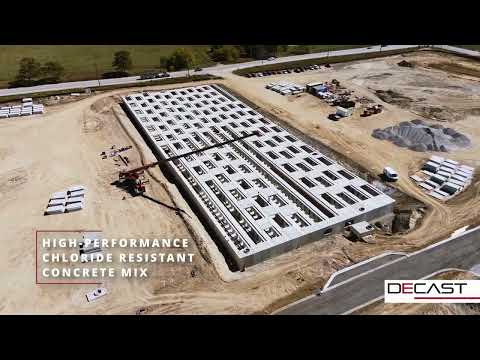
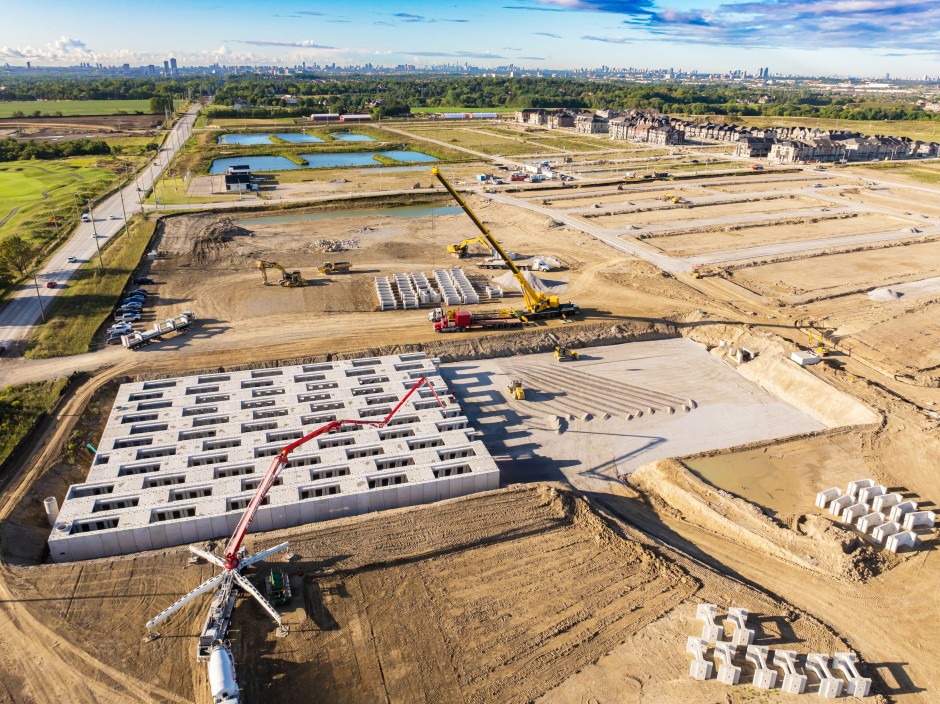
The TH (Treasure Hill) Warden development in Markham, Ontario, boasts a significant advancement in the integration of stormwater management infrastructure with modern community planning. The eastern portion of the development incorporates one of the largest residential underground stormwater management facilities built in Ontario to date, providing approximately 18,353 m³ of combined permanent pool and active water storage while preserving the land above for community open-space uses.
Serving an approximately 18.56-hectare drainage area, the facility was engineered to provide multiple layers of stormwater management, including water quality control, erosion control, quantity control, and temperature mitigation.
This approach directly supports the objectives of contemporary municipal planning: creating compact, efficient communities while maximizing usable land and integrating infrastructure into the built environment. The result is a solution in which essential stormwater infrastructure becomes invisible to the public, while the land above can be dedicated to active and passive recreational and community uses.
Solutions: Dual-Use of Land
The defining feature of the TH Warden project is its control of stormwater infrastructure below ground rather than occupying valuable surface land with a conventional open pond.
Traditional stormwater management ponds require significant amounts of developable land and may introduce additional concerns associated with mosquitoes and vector-borne diseases, nuisance wildlife, debris and garbage accumulation, maintenance, fencing, overall public safety, and the introduction of invasive species such as goldfish. TH Warden takes a fundamentally different approach. By placing approximately 18,353 m³ of stormwater storage underground, the project allows the land above the facility to be transformed into usable open space and remove many public safety risks and nuisances. The surface area can support softscape and hardscape applications, as well as active and passive recreational functions rather than be dedicated exclusively to storing stormwater overflow. This provides a key land-use benefit where the facility manages stormwater without the physical footprint of a surface pond.
The underground system also aligns with Provincial, Regional, and City of Markham planning objectives focused on optimizing land supply, encouraging compact new development, promoting efficient land-use patterns, and making better use of existing resources.
The project represents more than an alternative to stormwater management. It is an example of infrastructure being intentionally integrated into the development rather than allowed to dictate how the community's surface land must be used.
Installation & Excellence: Site-Specific Considerations
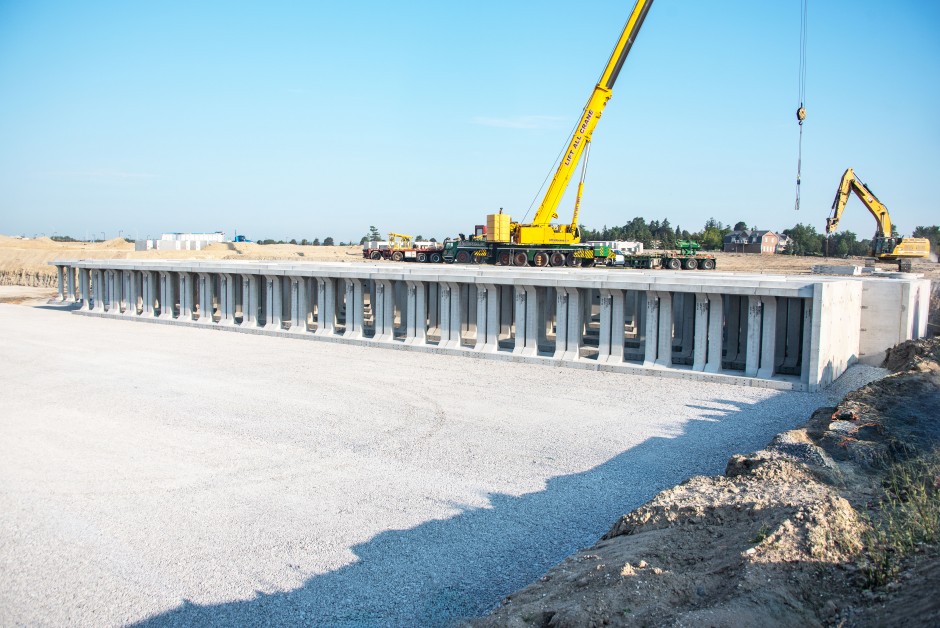
The scale and complexity of the TH Warden stormwater facility required careful engineering, coordination, and construction planning. The underground system spans approximately 1.5 acres and incorporates a substantial storage volume while operating beneath land intended for future community open-space use.
One construction challenge was the facility’s variable earth cover, ranging from approximately 1.5 m to 2.5 m. To accommodate these changing loading conditions, various reinforcement designs were incorporated throughout the structure, ensuring that the system could safely perform under the site-specific conditions.
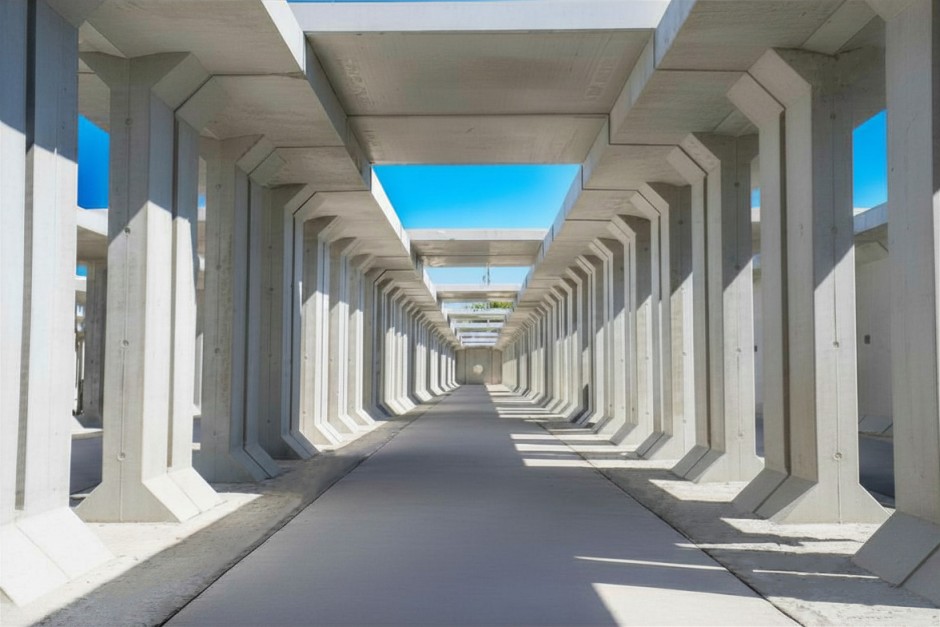
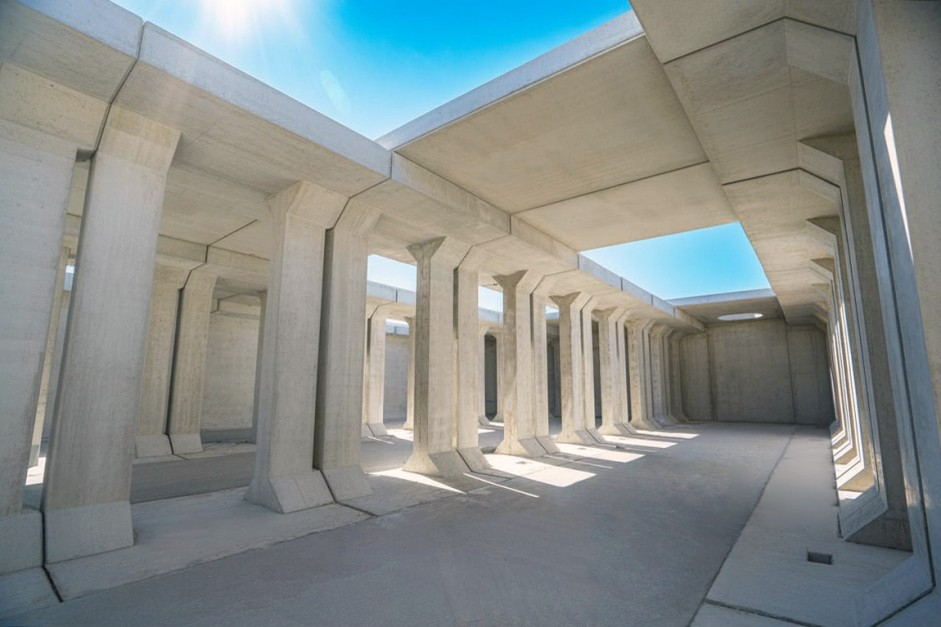
The facility incorporates many special features to assist in performing all its functions, such as a sump near the tank inlet to direct the accumulation of sediment, weir walls to separate the forebay and aftbay sections of the facility, and a subdrain network underneath the tank to assist with groundwater drawdown during full maintenance operations. The facility is easily accessible through seven standard maintenance access holes and two removable top slabs, which can accommodate larger cleanout equipment if necessary.
The successful construction of this large-volume underground facility required close coordination between the project stakeholders, engineering team, precast supplier, and installation teams.
Manufacturing Excellence: Reliable Design
The TH Warden facility utilizes the 3m-inside-height I-STORM system as the primary underground stormwater management solution. The product was selected to provide the substantial storage capacity required by the development while allowing the surface land to remain available for active and passive community use. The I-STORM product is the most structurally sound and durable option that exists in the stormwater management space in Ontario to date. The structure and its components are designed to the Canadian Highway Bridge Design Code, meaning the facility can easily withstand full highway traffic loading. All precast concrete components are mechanically connected together, unifying the structure helping the facility to counteract any differential settlement effects.
One key design feature is the specialty concrete mix that was developed specifically for use in Ontario’s cold weather climate where road salts are known to enter stormwater management networks. Through modeling conducted by the University of Toronto, the mix design was shown to be effective in conservative chloride exposure scenarios, prolonging the life of these concrete structures, such that rehabilitation due to chloride exposure is unlikely to be required for at least 100 years of the facility’s life (under intended operations and maintenance schedules).
The facility is spacious inside, facilitating inspection and maintenance activities to take place. Access openings and removable top slabs have been strategically placed to accommodate not only personnel access, but also the potential of lowering small equipment, such as a skid steer, into the facility, which can be used to push sediment towards designated removal areas.
Result: Long-Term Solution
The TH Warden facility delivers benefits well beyond stormwater storage.
The system provides water quality, erosion control, quantity, and temperature mitigation for an approximately 18.56-hectare drainage area. It is engineered to meet pre-development release thresholds during major storm events, including up to the 75-year return period, before controlled discharge enters the local receiving network, including Berczy Creek. Temperature mitigation also helps reduce thermal impacts on downstream waterways, supporting aquatic species and natural ecosystems.
The project significantly improves land-use efficiency compared with a conventional surface stormwater pond. Approximately 1.5 acres of underground infrastructure preserves valuable surface land for parks, open space, and community amenities.
Eliminating the open pond also reduces potential public safety and nuisance concerns, including standing water, mosquitoes and vector-borne disease, nuisance wildlife, debris and garbage, and the introduction of invasive species.
The project supports compact, efficient development while providing essential municipal stormwater infrastructure without compromising productive use of the surface land.
Most importantly, the project demonstrates that stormwater infrastructure can be an integrated component of community design rather than competing for land use. The result is a solution that simultaneously addresses engineering requirements, environmental protection, land efficiency, community functionality, and long-term maintenance.
Project Details
Location: Markham, OntarioBusiness Area: Storm & Sanitary
Product: I-STORM

DECAST is leading the Canadian infrastructure market with water transmission, storm & sanitary, tunneling, bridge & engineered precast products.


Copyright 2026 DECAST LTD. | Accessibility | All Rights Reserved | (800) 461-5632 Developed by MediaSuite Inc.
Registered in Canadian Patent and Trademark Office